

5 Proven Steps to Get Rid of Water Damage Odor: A Step-by-Step Guide
By EcoPlanet Property Services
Water damage odor comes from mold, mildew, and bacteria growing in materials that stayed wet for more than 24 to 48 hours. The smell will not go away on its own, even after the area looks and feels dry, because the moisture causing it is often trapped inside walls, flooring, or insulation where you can’t see it.
Why Does Water Damage Odor Linger?
That musty smell is off-gassing from mold and bacteria feeding on wet organic material, drywall paper, carpet padding, wood subfloor, and insulation. Surface drying does not remove the moisture trapped inside these materials, so the smell keeps coming back even after you’ve mopped and run a few fans.
Step 1: Find the Source of Moisture
Before you can get rid of the smell, you need to find every place water traveled, not just the areas that are visibly wet.
- Use a moisture meter to check drywall, baseboards, and flooring
- Check behind and under cabinets, appliances, and built-ins
- Use thermal imaging for larger areas or multi-room floods
Step 2: Remove Anything That Cannot Be Fully Dried
Some materials hold onto moisture no matter how long you run a fan, and they need to come out.
- Carpet padding (almost always needs replacing after a flood)
- Wet insulation inside walls
- Drywall that was submerged, typically cut back 12 inches above the waterline
Step 3: Dry the Space Completely
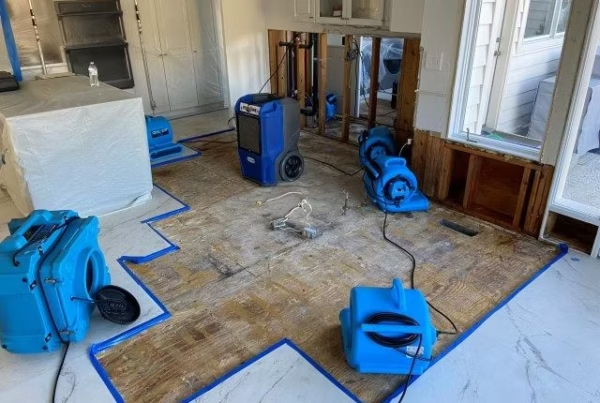
Household fans are not enough for anything beyond a small spill. Commercial-grade dehumidifiers and air movers typically need to run for 3 to 5 days to bring a space back to a safe moisture level, and drying time should be confirmed with a moisture meter, not a guess.
Hey Lewis, we’re going to insert an image here, it’ll be blank for now. It’s going to be about Industrial air movers and a dehumidifier set up in a drying room. Alt text: Industrial dehumidifier and air movers drying a flooded room
Step 4: Clean and Disinfect
Once everything is dry, surfaces that had contact with floodwater should be cleaned with an antimicrobial treatment, not just soap and water, to stop any remaining mold or bacteria from taking hold.
Step 5: Get Rid of Water Damage Odor for Good (Don’t Just Mask It)
Air fresheners and odor sprays only cover up the problem temporarily. A proper deodorizing treatment, like ozone or hydroxyl treatment, breaks down the odor-causing particles instead of masking them.
When to Call a Professional for Water Damage Odor
If the odor is still noticeable a few days after the area looks dry, or if the affected area is larger than a single small spot, it usually means moisture is trapped somewhere you can’t reach on your own.
Frequently Asked Questions
Can I get rid of water damage odor myself?
For a very small, isolated spill, yes, fans, a dehumidifier, and thorough cleaning can usually handle it. For anything larger, or if the smell persists after drying, the moisture is likely hidden somewhere that needs professional equipment to find and treat.
How Long Does Water Damage Odor Last?
Once the moisture source is properly addressed, the smell typically clears within a few days. If it lingers longer than a week, that’s a strong sign there’s still trapped moisture or early mold growth somewhere in the space.
If the smell hasn’t gone away, Eco Planet can find the source and fix it properly. Contact us for a free inspection.



To get started, you can visit the janitorial and strata services pages on EcoPlanet.ca or reach out directly in the way that suits you best.
Call 604-565-5238, email team@ecoplanet.ca, or use the contact form at https://ecoplanet.ca/contact-us/ to request a quote or a tailored janitorial services proposal for your Metro Vancouver property. A brief conversation now can set your building up for a cleaner, easier to manage year ahead.