


Power Sweeping: 5 Ways It Keeps Parkades and Walkways Safe Year Round
Power sweeping is one of those services that’s easy to skip, right up until someone trips over a piece of broken pallet debris in the loading area, or a resident calls in about glass near the bike storage. Property managers juggle a lot of maintenance line items, and sweeping can feel like the least urgent one on the list. In practice, it’s one of the simplest ways to keep a property safe, because most of what a sweep picks up is exactly the kind of loose debris that causes slips, trips, and vehicle damage.
Here’s what we’ll cover:
- What power sweeping is, and how it’s different from washing or scrubbing
- Why it matters for safety, not just appearance
- What a power sweeping schedule should look like
- How it fits with parkade cleaning and exterior maintenance overall
- What to expect from a professional sweeping service
What Power Sweeping Is (And How It’s Different)
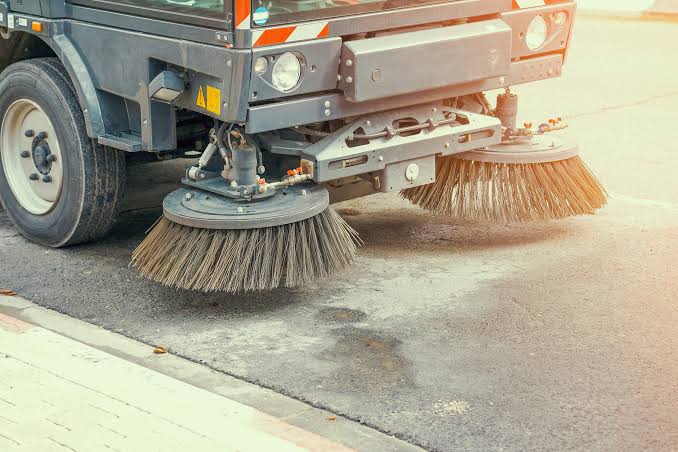
Power sweeping uses a mechanical sweeper, either walk-behind or ride-on, with rotating brushes and a collection hopper to clear loose debris like grit, leaves, broken glass, gravel, and construction dust from hard surfaces. It’s a dry process. That’s the key difference from power washing or power scrubbing, which both use water. Sweeping usually comes first in a maintenance sequence, clearing the surface debris before a wash or scrub goes deeper on stains and buildup.
For parkades especially, sweeping matters because loose grit and gravel act almost like sandpaper under vehicle tires, gradually wearing down sealants and coatings on the concrete. Keeping surfaces clear isn’t just about looks, it protects the asset underneath.
Why It Matters for Safety, Not Just Appearance
WorkSafeBC’s guidance on slips, trips, and falls points out that these incidents happen when people lose their footing after their feet collide with objects, or lose traction due to debris, water, or grease on a walking surface. Parkades and exterior walkways are exactly the kind of spaces where this risk builds up quietly. Leaves pile up near stairwells. Gravel tracks in from construction sites nearby. Broken glass or litter collects in corners that don’t get much foot traffic, until someone finally walks through.
Regular power sweeping removes those hazards before they turn into an incident report. It’s a low-cost, preventative piece of exterior maintenance that pays for itself the first time it avoids a claim.
What a Power Sweeping Schedule Should Look Like
The right frequency depends on the property, but here’s a general guide we use with property managers:
- Underground parkades: weekly to biweekly, depending on traffic
- Above-ground parking areas and loading zones: weekly
- Exterior walkways and entrances: two to three times a week in fall, when leaf debris peaks
- Construction-adjacent properties: as needed, often more frequently during active nearby projects
Fall is usually the season that catches property managers off guard. Leaf buildup on a wet walkway is one of the more common slip hazards, and it’s entirely preventable with a consistent sweeping schedule.
How Sweeping Fits With Parkade Cleaning and Exterior Maintenance
Power sweeping works best as part of a bigger plan rather than a standalone service. A typical rotation for a commercial or strata property might look like weekly debris pickup, quarterly power scrubbing for the parkade to handle oil and grime buildup, and one or two power washing visits a year for the exterior. Each service does a different job, and skipping sweeping usually just means the washing and scrubbing visits have to work harder, and cost more, to catch up.
We cover the full picture of exterior maintenance, including how these services work together, on our parkade cleaning services page.
What to Expect From a Professional Sweeping Service
A good sweeping contractor should be able to work around your building’s schedule, since parkade sweeping often needs to happen during low-traffic hours to avoid disrupting residents or tenants. Ask about equipment, since a ride-on sweeper with a proper collection hopper does a noticeably better job than a crew with push brooms, especially on larger properties. You should also expect a documented visit log, so you have a record of what’s being done and when.
At EcoPlanet Property Services, power sweeping is built into our regular parkade and exterior maintenance programs across Greater Vancouver, and every visit gets logged and photographed through our reporting app so you always know where things stand. If you’d like to build a sweeping schedule that fits your property, get in touch and we’ll put together a plan.
It’s a small line item compared to the rest of a building’s maintenance budget, but it’s one of the few that directly reduces liability exposure. Worth keeping on the schedule year round, not just when the leaves start falling.


To get started, you can visit the janitorial and strata services pages on EcoPlanet.ca or reach out directly in the way that suits you best.
Call 604-565-5238, email team@ecoplanet.ca, or use the contact form at https://ecoplanet.ca/contact-us/ to request a quote or a tailored janitorial services proposal for your Metro Vancouver property. A brief conversation now can set your building up for a cleaner, easier to manage year ahead.