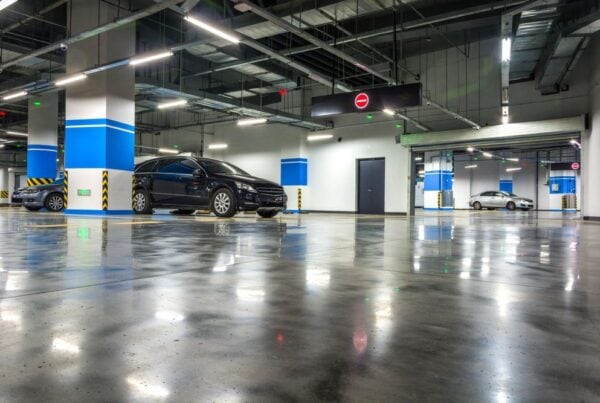


Power sweeping before power washing is the step that separates a job that looks clean for a day from one that actually stays clean. Here’s a mistake we see often: a crew shows up, power washes a parking lot or parkade, and calls it done. The surface looks clean for about a day. Then the dust, gravel, and loose debris that got pushed around, not removed, settles right back into place.
Sweeping first isn’t an optional extra step. It’s what makes the power washing actually work.
What Power Sweeping Actually Does
Power sweeping uses mechanical sweepers to pick up loose debris: gravel, leaves, sand, dust, litter, whatever’s sitting loose on the surface. It doesn’t touch stains or ground-in dirt. That’s not its job.
Its job is to clear the surface so that whatever comes next can actually do its work.
3 Proven Reasons for Power Sweeping Before Power Washing
1. It gets a cleaner result. Pressurized water is very good at rinsing a clean surface and very bad at cleaning a surface buried under loose debris. Wash over unswept gravel and dust and you’re mostly relocating it: pushing it into corners, splattering it onto walls, or leaving it in a muddy slurry near the edges of the lot.
2. It protects your drains. When loose debris is washed instead of swept, drains take the worst of it. A clogged drain from wet debris is a more expensive problem than the one you started with. It also matters environmentally: in Metro Vancouver, storm drains typically flow to local streams and waterways, so keeping sediment and litter out of them is part of responsible property maintenance.
3. It saves water. Removing debris mechanically before washing means less water is needed to get the same result, since the pressure washer isn’t fighting through a layer of loose material to reach the actual surface.
Where Power Sweeping Before Power Washing Matters Most
- Parking lots and parkades, where gravel and grit accumulate constantly from vehicle traffic
- Loading docks, where packaging debris and dust collect quickly
- Walkways near landscaping, where leaves and organic debris build up seasonally
- Any surface after winter, when sand and salt residue are left behind; see our guide to spring cleanup after winter
The Right Order, Every Time
A properly sequenced exterior cleaning job looks like this:
- Sweep first to clear loose material
- Wash to address what’s bonded to the surface
- Scrub any areas with set-in stains that washing alone won’t lift
Skipping the sweep doesn’t save time. It just moves the mess somewhere else and means redoing the job sooner. For stubborn parkade stains, see our guide to power scrubbing vs. power washing.
What to Ask Your Contractor
When you get a quote for exterior cleaning, ask whether power sweeping before power washing is included, or whether the crew goes straight to washing. A contractor who skips the sweep may quote lower, but you’ll pay for it in dirtier results and clogged drains.
It’s also worth asking how often the lot should be swept between washes. Our guide to building a power sweeping schedule covers typical frequencies.
Get It Done Right the First Time
At EcoPlanet Property Services, every power washing job on a parking area or parkade starts with a sweep, because power sweeping before power washing is what actually gets the surface clean instead of just wet. See the full range of what we offer on our power cleaning services page, or request a free quote for your property.