
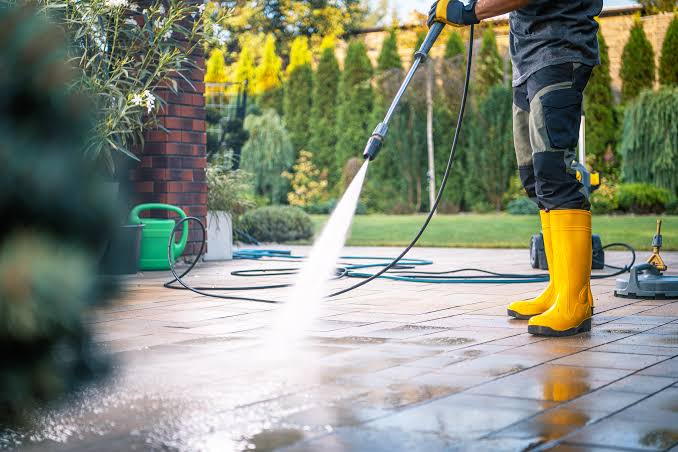

Quick answer: A building-wide balcony and patio power wash works best when the strata council confirms who is responsible under its bylaws, gives owners clear written notice with a schedule, protects units below from runoff, and hires a crew that adjusts pressure for membranes and railings. Done right, it’s one of the most visible improvements a council can make in a single day.
Balconies and ground-floor patios collect a year’s worth of dirt, pollen, bird droppings and moss. Some owners clean their own; many don’t. A coordinated wash brings the whole building up to the same standard. It also comes with more logistics than most exterior jobs, because every balcony is attached to someone’s home.
Step 1: Check Who’s Responsible
In most BC stratas, balconies and patios are limited common property, designated for the use of one strata lot but still part of the common property. Who handles cleaning and maintenance depends on your bylaws. Many buildings follow or adapt the Standard Bylaws, which divide responsibilities between the corporation and owners, while others have custom bylaws that set it out differently.
Before booking, the council should confirm:
- Whether routine balcony cleaning is an owner or strata responsibility
- Whether the wash will be paid from the operating fund or charged back
- Whether participation is mandatory or opt-in
If the answer isn’t clear, your strata manager or a strata lawyer can help interpret the bylaws.
Step 2: Give Owners Proper Notice
The Strata Property Act sets notice requirements for entering a strata lot. Balcony access is often possible from outside, but notice is still essential so residents can prepare. A good notice includes:
- The date and time window for each floor or stack
- What residents need to move: furniture, plants, barbecues, storage bins, rugs
- A request to keep balcony doors and windows closed
- A note to bring in laundry, pet items and anything that shouldn’t get wet
- Who to contact with questions or accessibility concerns
Posting notices in elevators and sending them by email a week or two in advance, then a reminder two days before, cuts down on missed units.
Step 3: Plan for Runoff
Water from upper balconies has to go somewhere. Without a plan, it ends up on balconies below, ground-floor patios or parked cars. Ways to manage it:
- Work top-down by stack so lower units are cleaned after upper units drain
- Use balcony drains and scuppers where they exist, and check that they’re clear first
- Use controlled, low-volume washing on upper floors
- Protect ground level with clear signage and, where needed, temporary barriers
- Keep wash water out of storm drains as much as possible, especially if cleaners are used
Step 4: Protect Membranes, Railings and Glass
Balcony surfaces are often waterproof membranes or coatings, not bare concrete. Too much pressure can lift edges, damage seams and void a warranty. A professional crew should:
- Use low pressure on membranes and coated decks
- Avoid spraying directly into door sills and weep holes
- Clean glass railings with a gentle rinse to prevent spotting
- Report any visible membrane damage to the council
That last point matters. A balcony wash is a chance to spot problems early, and those notes can be useful for your depreciation report and maintenance planning.
Step 5: Handle Units That Aren’t Ready
Some balconies will still be full of furniture on wash day. Decide in advance whether the crew will skip them, return later, or work around items. Write the policy into the notice so owners know what to expect.
How Often Should Balconies Be Washed?
Most strata buildings in Metro Vancouver do a coordinated balcony wash once a year, usually in late spring or early fall. Buildings near busy roads, construction or heavy tree cover may benefit from twice a year.
Frequently Asked Questions
Can the strata require owners to clear their balconies?
That depends on your bylaws. Many councils request rather than require it, and skip units that aren’t ready.
Will power washing damage my balcony membrane?
Not if the crew uses appropriate low pressure and avoids seams and edges. High-pressure washing on membranes is a common cause of damage.
How long does a building-wide balcony wash take?
It depends on the number of units and access, but many mid-rise buildings can be completed in one to three days.
Do residents need to be home?
Usually not, if balconies can be reached from outside. Residents should still prepare their space and keep doors closed.
A Cleaner Building, One Balcony at a Time
EcoPlanet Property Services helps strata councils across Greater Vancouver plan and carry out balcony, patio and exterior power washing with notice templates, careful runoff management and eco-friendly products. Request a free quote or call 604-565-5238.