
Quick answer: Most slippery floors aren’t slippery because they’re shiny. They’re slippery because of contamination: water, residue from the wrong cleaners, finish built up incorrectly or grit acting like ball bearings. Using finishes designed for slip resistance, cleaning with residue-free products, managing water at entrances and maintaining floors on a schedule can reduce fall risk while keeping floors looking polished.
Slips, trips and falls are among the most common injuries in commercial and residential buildings. For property managers, a single fall in a lobby can lead to an injury claim, an insurance headache and an unhappy council or owner. Floor care plays a bigger role in prevention than many people realize.
Shine vs. Slip: Clearing Up the Myth
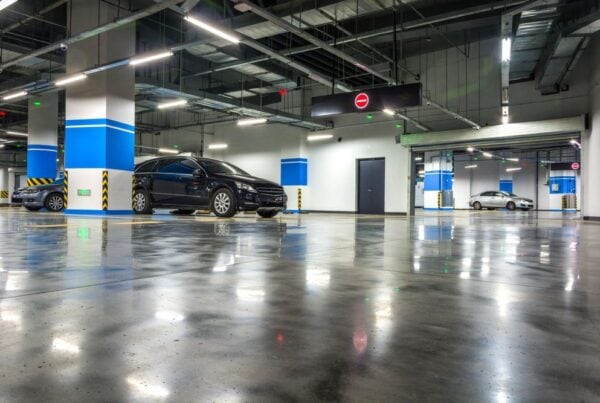
Gloss is about how light reflects off a surface. Slip resistance is about friction between a shoe and the floor. A well-maintained, high-gloss finish can be very slip resistant, while a dull floor covered in residue can be dangerous. The goal is a clean, properly finished surface, not a matte one.
What Makes Floors Slippery
- Water: rain tracked in at entrances is the biggest factor in Vancouver
- Cleaner residue: too much product, or the wrong product, leaves a film
- Dirty mop water: spreads a thin layer of soil and grease
- Grit and sand: loose particles roll underfoot
- Incorrect finish application: heavy coats, poor curing or the wrong finish for the floor type
- Oils and spills: especially near food service and garbage areas
How Floor Finishes Help
Many commercial floor finishes are formulated to provide good slip resistance when properly applied and maintained. Some products are tested against recognized slip-resistance methods. When choosing or approving a finish, ask your contractor:
- Is this finish designed for slip resistance?
- Is it compatible with our floor type (VCT, stone, concrete, sealed wood)?
- How many coats will be applied, and how long does it need to cure?
- How should it be maintained to keep slip resistance?
Cleaning Habits That Keep Floors Safe
- Use the right dilution. More cleaner doesn’t mean cleaner floors; it means more residue.
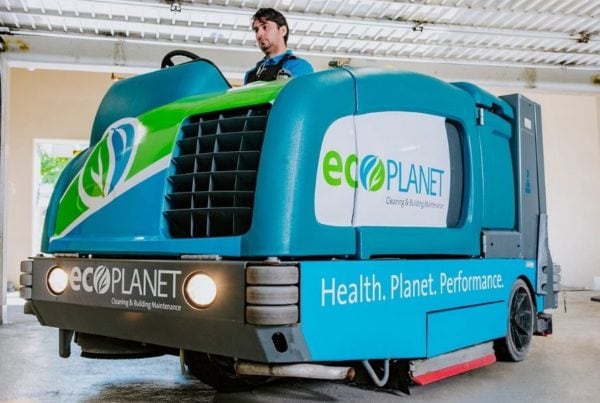
- Change mop water often or use auto-scrubbers that recover dirty water.
- Dust mop daily to remove grit before it’s ground in.
- Clean spills immediately and post signage while floors dry.
- Use neutral cleaners on finished floors to avoid breaking down the finish.
Managing Water at Entrances
In the wet season, the first few metres inside the door are the highest-risk zone in most buildings:
- Use enough walk-off matting: an outdoor scraper mat plus indoor absorbent matting
- Replace mats when they’re saturated or curling
- Have caretakers or janitorial staff check and dry entrances during heavy rain
- Keep wet-floor signs handy and use them
Documenting Floor Safety
Under BC’s Occupiers Liability Act, property occupiers must take reasonable care to keep people reasonably safe. Keeping records of floor maintenance, inspections and wet-weather procedures helps show that reasonable steps were taken.
Frequently Asked Questions
Are anti-slip coatings the same as floor finish?
Not always. Some anti-slip treatments are specialized coatings or etching treatments. Standard finishes can also be slip resistant. The right choice depends on the floor and the risk.
Does stripping and refinishing make floors more slippery?
Freshly applied finish can be slippery until it fully cures. Areas should stay closed until the product is ready for traffic.
Which floors in a building are highest risk?
Entrances, elevator lobbies, ramps, washrooms and areas near garbage rooms or food service.
Can a floor be tested for slip resistance?
Yes. Specialists can measure slip resistance on site, which can be useful after an incident or before choosing a new finish.
Safer Floors That Still Look Great
EcoPlanet Property Services maintains and refinishes floors in strata and commercial buildings across Greater Vancouver, with eco-friendly products and routines that keep floors clean, glossy and safer underfoot. Request a free quote or call 604-565-5238.
Slip-Resistant Floor Finish: Cut Fall Risk, Keep the Shine
slip-resistant-floor-finish
A shiny floor doesn’t have to be a slippery one. How slip-resistant finishes, cleaning habits and matting reduce fall risk in commercial buildings.
slip-resistant floor finish, slip and fall prevention, commercial floor safety, anti-slip floor treatment, wet floor safety lobby