

Quick answer: Dumpster pads and loading docks should be power washed far more often than the rest of a property, typically monthly for busy commercial sites and quarterly for quieter ones. These areas collect food waste, grease and leachate that cause odours, attract pests and create slip hazards. Hot water and a degreasing compound are usually needed to get them properly clean.
Most exterior power washing programs are built around entrances and walkways, the places tenants and visitors see. The back of the building gets cleaned “when we get to it.” For commercial properties with retail, restaurant or industrial tenants, that approach creates problems that eventually make their way to the front door.
Why These Areas Get Dirty So Fast
Dumpster pads and loading docks deal with a mix of contaminants that rarely shows up anywhere else on a property:
- Leachate: the liquid that drains out of garbage bins and soaks into concrete
- Grease and food waste: especially near restaurants and food service tenants
- Hydraulic fluid and oil: from delivery trucks, forklifts and compactors
- Cardboard pulp and wet debris: that mats down and holds moisture
Vancouver’s wet climate makes this worse. Rain keeps residue damp, so it never dries out and flakes off on its own. Instead it builds into a slick, smelly layer.
What Happens When They’re Neglected
Odours that travel
Odour from a dirty dumpster pad doesn’t stay put. It drifts into parkades, loading corridors and sometimes through air intakes. Tenants notice, and in mixed-use buildings, residents notice too.
Pests
Food residue and standing liquid attract rats, crows and insects. Pest control can treat the symptoms, but without regular cleaning the attraction never goes away.
Slip and fall risk
Grease plus rain is one of the most slippery combinations on a commercial property. Loading docks are also where staff carry heavy loads, which raises the stakes if someone falls.
Surface damage
Acidic leachate and constant moisture can etch concrete over time, and oils soak in deeper the longer they sit.
A Practical Cleaning Schedule
| Property type | Dumpster pad | Loading dock |
|---|---|---|
| Restaurant or food court tenants | Monthly, plus spot cleans after spills | Monthly |
| Mixed retail plaza | Monthly to every 6 weeks | Quarterly |
| Office building | Quarterly | Quarterly to twice a year |
| Light industrial / warehouse | Quarterly | Quarterly, more if forklifts leak |
| Strata residential | Quarterly | Twice a year (move-in bays) |
Treat these as starting points. Summer heat speeds up odours, so many properties increase frequency from June to September.
What a Proper Clean Includes
- Clear the area. Bins are moved so the full pad can be cleaned, not just the gaps between them.
- Remove loose debris. Sweep up cardboard, wrappers and solids first so they don’t wash into drains.
- Apply a degreaser. An eco-friendly compound breaks down grease and organic residue.
- Hot water wash. Heat lifts bonded grease that cold water can’t move. See our guide on hot water vs. cold water power washing.
- Manage runoff. Wash water should be contained or directed away from storm drains.
- Clean the bins’ surroundings. Walls, curbs and enclosure gates collect splatter too.
Tips Between Cleanings
- Ask tenants to bag wet waste and keep bin lids closed
- Report leaking bins to your hauler so they can be swapped
- Keep grease containers on a spill tray
- Have your caretaker or janitorial team do a quick weekly walk-through
Frequently Asked Questions
Can I just hose down the dumpster pad myself?
A garden hose rinse moves loose debris but won’t remove grease or leachate soaked into concrete. It can also send contaminated water into storm drains, which most Metro Vancouver municipalities restrict.
How long does a dumpster pad clean take?
Most standard pads take one to two hours, depending on size, buildup and how easily bins can be moved.
Does cleaning help with odours right away?
Yes. Removing the residue removes the source. Odours return only as new waste builds up, which is why a regular schedule matters.
Should loading docks be done at the same time?
Combining them on the same visit is usually the most efficient option, since the same equipment and compounds are used.
Keep the Back of Your Building as Clean as the Front
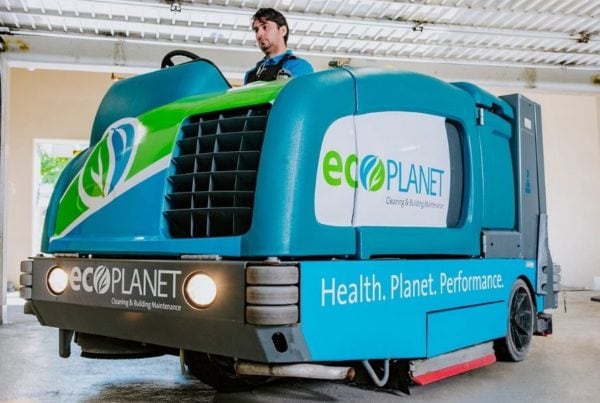
EcoPlanet Property Services builds dedicated power washing schedules for dumpster pads, loading docks and service areas across Greater Vancouver, using eco-friendly products and hot water equipment where it’s needed. Request a free quote or call 604-565-5238 to set up a program that fits your tenants and traffic.
Dumpster Pad and Loading Dock Cleaning: A Schedule Guide
dumpster-pad-loading-dock-cleaning
Dumpster pads and loading docks collect grease, odours and pests faster than any other surface. Here’s how often to power wash them and why.
dumpster pad cleaning, loading dock power washing, commercial power washing, garbage enclosure cleaning, odour control commercial property